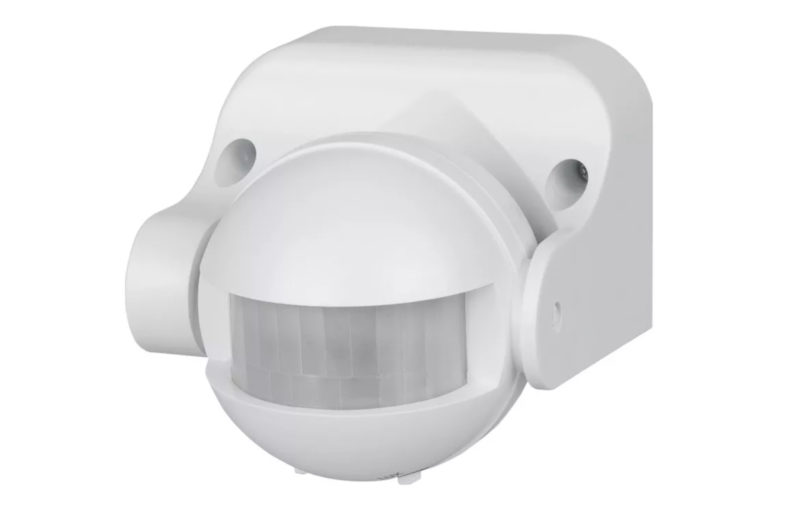
The device and principle of operation of motion sensors
A motion sensor (sensor, detector) is a device that non-contactly detects the presence of moving objects in the detection zone. These sensors, for the most part, do not respond to movement, but to the appearance of new objects. But the name has stuck and is widely used.
Areas of use
Motion detectors are used in various areas of automation. Each area has its own preferred sensor types.
Security systems
The most logical application of motion detectors is in systems protection of objects. The sensor can detect intrusion into a protected area or premises and give an alarm or turn on additional devices.
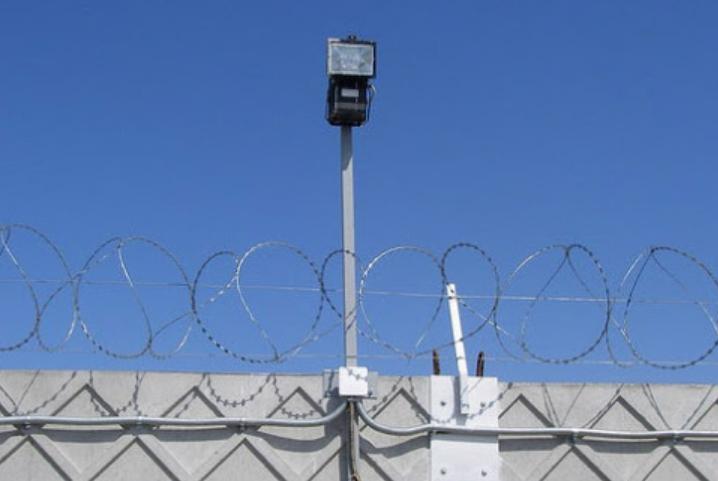
Switching on emergency lighting
In places with irregular stay of people, using such sensors, you can get significant energy savings. Such places include the entrances of residential buildings and industrial buildings, warehouses and other areas. The light in them is required to be turned on only for the duration of the stay of residents or staff. Having detected movement, the sensor generates a signal to activate the lighting devices.
Smart home systems
In Smart Home systems for detectors, you can find a much wider scope than simple lighting control. On a signal from the sensor, to rule heating, ventilation, air conditioning and other engineering systems. The mode of operation varies depending on the presence of people in the controlled area.
Motion and door opening sensor with Aliexpress (Smart Home system).
Types of sensors and technologies for their operation
Motion sensors are built on different principles. Each type of motion sensors has its own pros and cons that determine the scope of the devices.
infrared sensors
The most common sensors that capture infrared radiation. They belong to passive sensors - the controlled space is not “highlighted” by the corresponding signal. In the simplest case, it consists of two lenses that focus light radiation (infrared radiation has the properties of light, although it is invisible to the naked eye) from two zones of the controlled room. The lenses are directed so that the zones do not intersect. In normal mode, they receive radiation of the same intensity.If a person or another warm-blooded creature appears in one of the zones, the radiation level increases, which is "seen" by one of the sensors - in whose zone the object is located. The comparison circuit sees the intensity difference. When a certain level is reached, an alarm is generated.
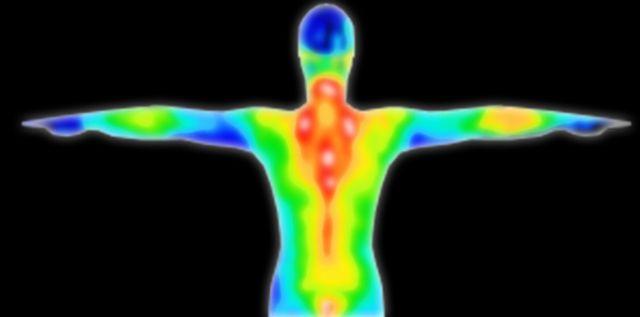
In practice, two zones are not enough for reliable noise-immune operation, and the field of view is divided into a large number of sub-sectors using several lenses. In fact, this sensor is a presence sensor - it will record the presence of a person, even if he is motionless. The disadvantages of such a device are the tendency to false alarms due to thermal interference (heated air jets, local heating due to changes in illumination, etc.).
Ultrasonic detectors
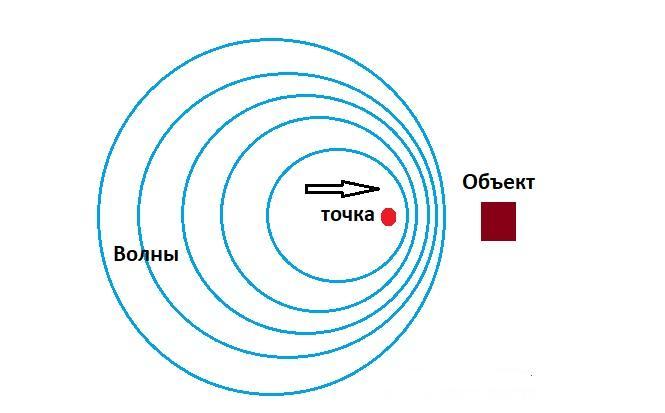
How this motion sensor works based on the phenomenon of echolocation. The transmitter generates sound waves that are inaudible to humans. After a series of transmissions, the detector switches to receive mode. If there are no moving objects in the field of view, then the ultrasonic signal reflected and returned to the sensor will have the same frequency as the emitted one. If the signal is reflected from a moving object, then the frequency of the returned ultrasound will be different (Doppler effect). The circuit analyzes the parameters and, when motion is detected, generates an alarm. Such a sensor is more noise-resistant due to the fact that it reacts only to moving objects, regardless of their nature and temperature. But it is unable to detect slow moving objects - they will not shift the frequency within the required limits.
RF sensors
This type of sensor also operates on the principle of a locator, only it works at radio frequencies. The emitted signal must have a high enough frequency to detect small objects. The Doppler effect is not used in such conditions - in order to obtain sufficient shift, objects must move at a speed comparable to the speed of light. Therefore, the sensors capture only the change in intensity and are also, in fact, presence sensors. Such a detector will work when objects that reflect the signal appear (or disappear) in the zone, regardless of whether they are moving or not.
The advantage is the ability of the signal to penetrate radio-transparent (wooden, brick, etc.) walls and partitions, so they can be used to control large rooms with several rooms. The downside is the high cost of the device, as well as the inability to detect objects that do not reflect radio waves. Another limitation to the application is the effect of radio emission on living organisms. The signal level must be minimized.
Combined systems
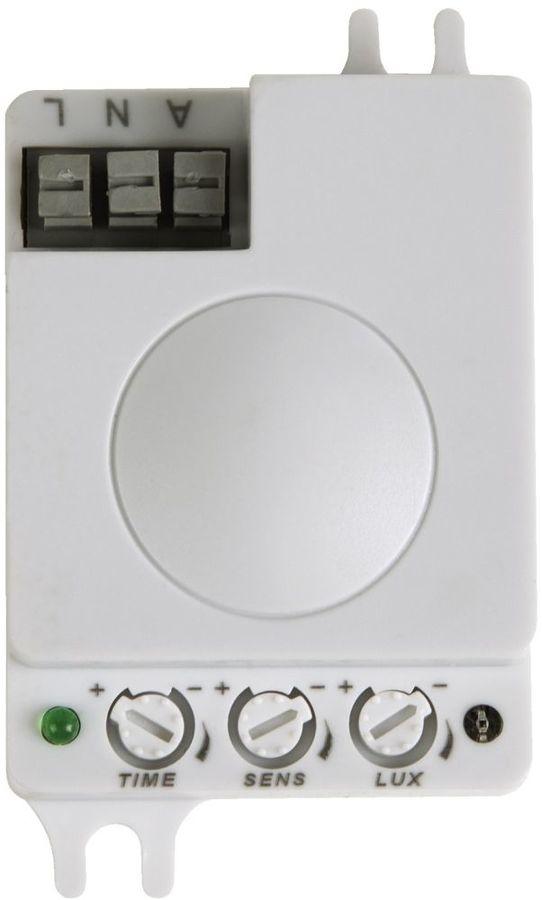
For reliability, two or more principles for detecting an abnormal situation can be combined in one sensor. In security systems, an infrared sensor is often combined with a glass break detector or an acoustic relay. This allows you to reliably record unauthorized entry into the apartment and avoid false alarms.
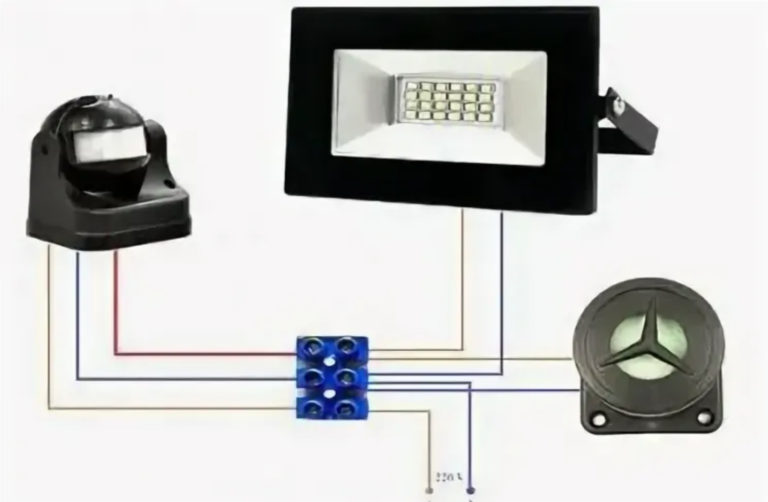
Another option is a combination of a motion sensor and photorelay. Such a system, when a person is detected, turns on the light in the entrance, but only at night.During the day, the photo relay turns off the detector so as not to waste electricity during daylight hours.
Outdoor surveillance cameras with a motion detection sensor are popular. The system turns on only when an object enters the field of view of the complex. This achieves two benefits:
- recording is carried out only at the right moments, which saves space on the storage device;
- viewing and analysis of the record is facilitated due to the lack of the need to view long sections without events.
There are other options for combining sensors. This approach improves the functioning of object detection systems.
Parameters for selecting sensors
Part of the characteristics of the motion sensor applies to any devices powered by electricity. This is the degree of protection, supply voltage, dimensions, type of fastening, etc. But there are also specific parameters that only this category of detectors has. It is most important to describe precisely these characteristics.
Viewing angle
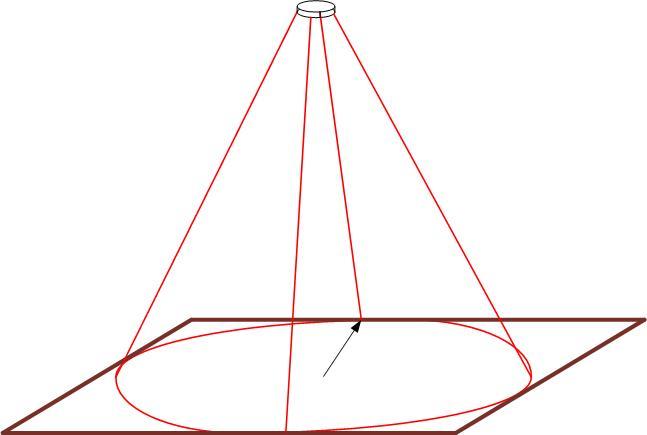
The viewing angle depends on the sensor design. Ceiling sensors have a 360 degree diagram and "see" the entire room.
The diagram of wall sensors, due to the design, has a smaller opening angle - from 120 to 180 degrees.
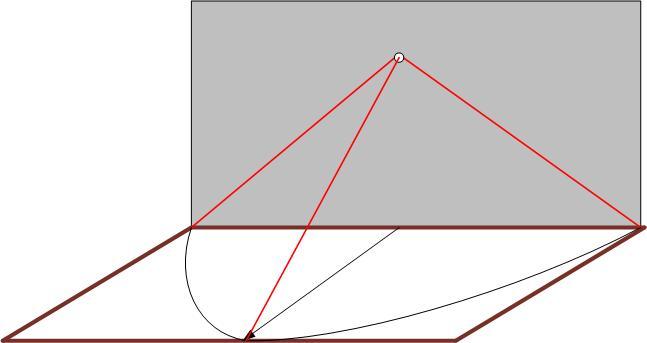
Directly below the sensor is a zone of invisibility. An attacker could sneak up on the sensor and damage it, rendering the detection system inoperable. To avoid this, you need to choose a sensor with an additional field of view - anti-sneak or anti-vandal.
Detection range
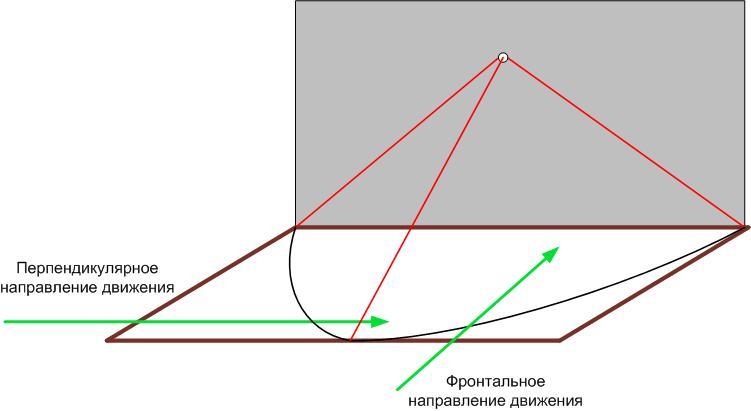
The range depends on the design of the sensor. But we must remember that the distance at which the sensor can detect a moving object depends on the direction of movement. Most sensors have the highest sensitivity if the movement is directed tangentially to the circle in the center of which the sensor is located (perpendicular distance). The smallest - if the object moves in the direction of the detector (frontal or radial distance). In the first case, the range will be greater. For ultrasonic devices, the situation is exactly the opposite. This is due to the different degree of manifestation of the Doppler effect in different directions of motion. Manufacturers do not always indicate this difference in the specifications, especially for inexpensive devices. In the specification you can find one figure - and it is on the conscience of the manufacturer.
| Device type | Principle of operation | Declared range, m |
| DD-024-W | Infrared | 6 |
| Steinel US 360 COM2 | Ultrasonic | 10 in the radial direction |
| MW32S Black | Microwave | 6 |
| MW03 | Microwave | 8 |
| IEK DD 008 | Infrared | 12 |
Place of use
The place where the equipment can be used is determined mainly by the degree of protection. Indoors IP can be minimal. Outdoor detectors must be protected from dust and water. Also, the choice of place of application can be influenced by the method of attachment.
Video review: The internal structure and purpose of the motion sensor Finder.
Additional functions
To improve system performance, increase its efficiency and eliminate false alarms, sensors may have additional functions.We have already mentioned a photo relay that allows you to disable the system during daylight hours, as well as an additional sensor for the creeping zone. But this list does not exhaust auxiliary options.
Light out delay
Sensors equipped with a light relay may have a useful function. When a moving object disappears from the field of view, the illumination is not turned off immediately, but after a delay of several tens of seconds. The meager overexpenditure of electricity pays off with convenience - a person can leave the detector's coverage area, but not completely leave the controlled area. With this function, he will do it not in the dark.
Animal Protection
Often, unauthorized operation of sensors is caused by small animals. When they appear, turning on the lighting is unnecessary, as is the reaction of the guards. Therefore, some sensors are inherently insensitive to the appearance of small moving objects. In infrared sensors, this function is implemented in the form of a restriction on the minimum size of the thermal spot.
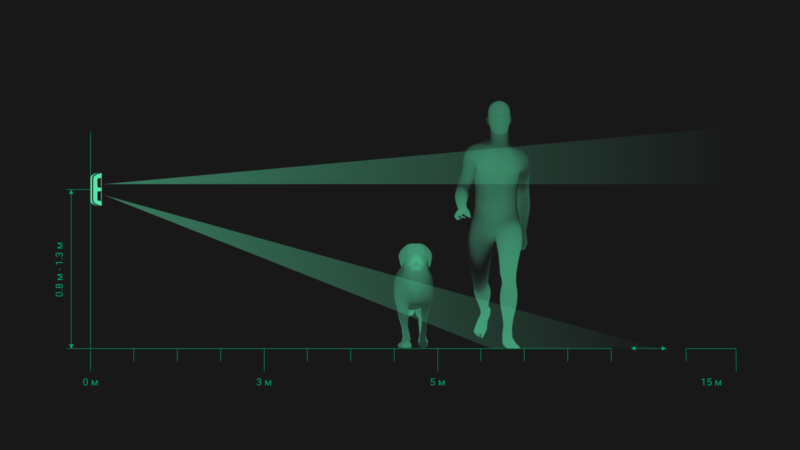
Important! If a small animal moves in close proximity to the sensor, the angular size of the thermal spot may be sufficient for a false alarm. Therefore, access to the area adjacent to the installation site of the sensor should be limited.
autonomy
If there are problems with powering the sensors from the household power supply, stand-alone devices can be a good choice. Energy independence is provided by conventional batteries. Many devices from one galvanic cell work for several months.In this case, it makes sense to choose sensors with wireless signal transmission - in order to completely get rid of cables.
Motion detectors are universal devices. They can be used to build various systems of protection, warning and regulation. It is also possible to use non-standard devices - everything is limited only by imagination and engineering ingenuity.