What light bulbs are best for home
When choosing a light bulb for the home, the user may be faced with a variety of products on the market. To choose a lamp with optimal performance, it is recommended to make a choice only after studying the features of the devices.
Characteristics and types of light bulbs for the home
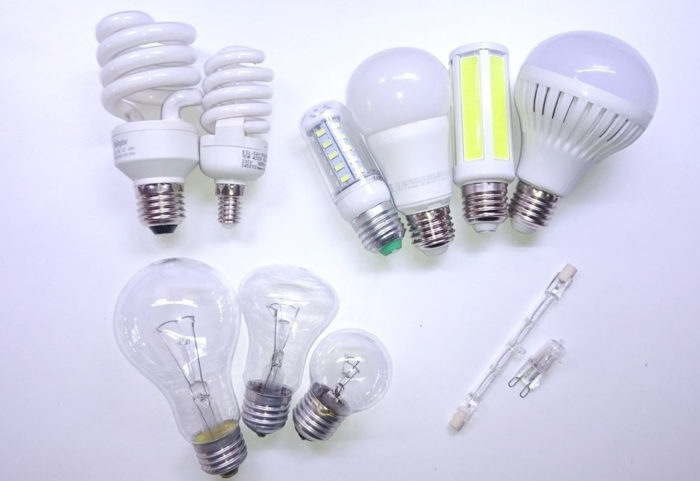
The most common types of household lighting devices include:
- incandescent lamps;
- luminescent sources;
- LED lamp.
Incandescent lamps
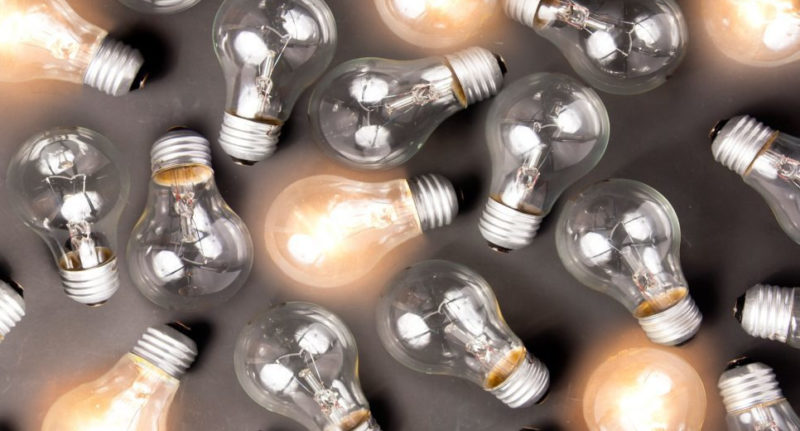
Incandescent lamps are now gradually being replaced from the market by more advanced lighting fixtures. However, in some cases they remain useful. In particular, such a source can be placed in a public place, which is rarely visited.
Pros:
- stable glow even with voltage fluctuations;
- lighting close to natural;
- availability;
- the design does not contain harmful components.
Minuses:
- small resource;
- fragile design;
- gradual decrease in the intensity of the light flux;
- hard to find high power models.
Luminescent elements
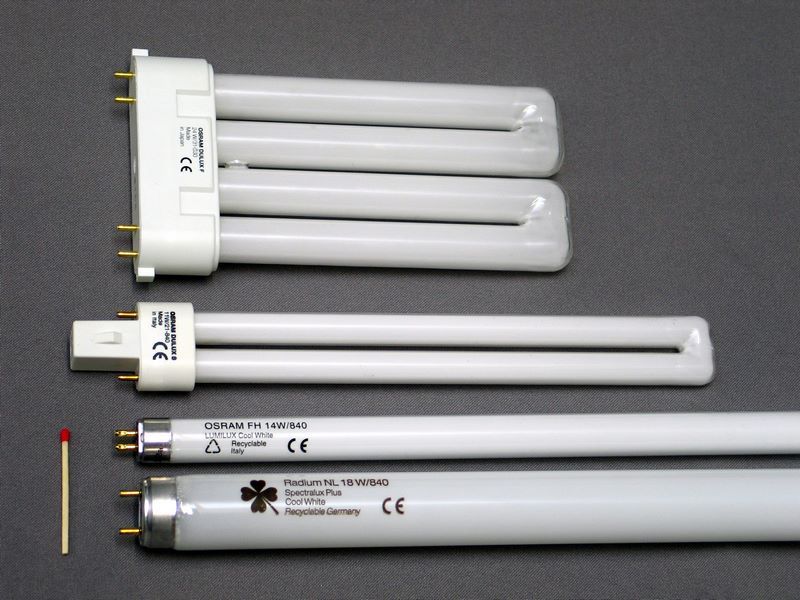
These are universal energy-saving lighting devices that can be installed in any room. A feature of such equipment is increased sensitivity to the number of on and off per day. It is best to turn on the lamp once and use it for a long time.
Pros:
- long service life of at least 2000 hours;
- increased light output compared to incandescent lamps;
- economical energy consumption.
Minuses:
- include hazardous components that can cause a lot of trouble if leaked;
- with prolonged use, the light intensity indicators gradually decrease;
- ballast required for operation;
- fragility;
- high price.
LED lamp
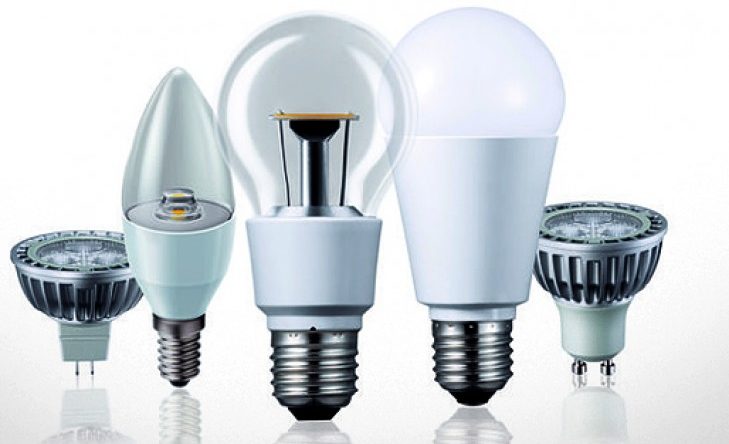
The most modern are LED lighting sources, completely devoid of the shortcomings of their predecessors. They are not suitable for the streets, but in houses they show their best side.
Advanced LED devices boast a spectrum as close as possible to sunlight. The generated flow is sufficient for work, leisure and other activities.
Pros:
- very high resource from 35,000 to 70,000 hours;
- economical energy consumption;
- convenience.
Minuses:
- high cost of models;
- the light is significantly different from daylight, which leads to sleep disturbance and other problems.
How to choose the right light bulb for your home
When choosing a light bulb for the home, it is necessary to determine the type of device, base, and choose the shape. Additionally, consider:
- electricity consumption;
- lighting level;
- safety.
For all models on the market, the correspondence is true: the more powerful the lamp, the brighter it shines. The luminous flux is measured in lumens and is indicated on the packaging.
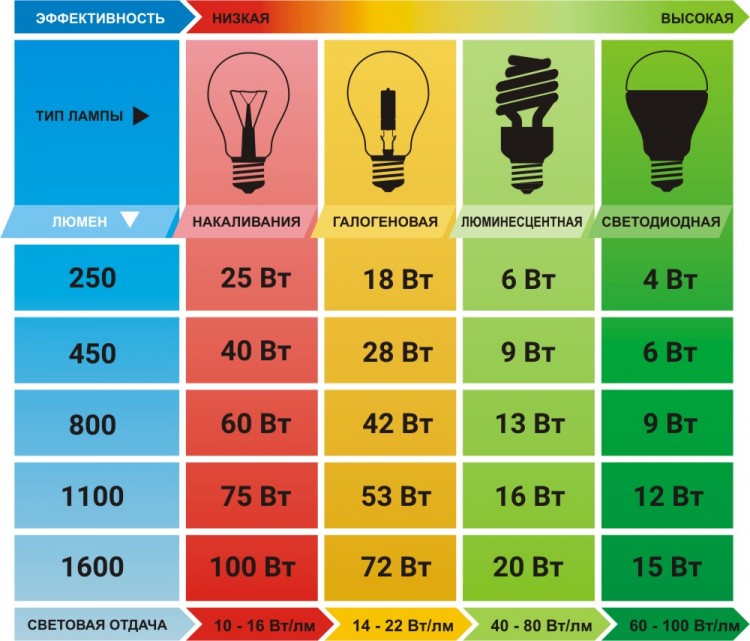
The following selection criteria for power have been formed:
- for incandescent lamps - about 18 W per 1 sq.m of area;
- luminescent devices - 8 W per 1 sq.m;
- LED elements - 3 W per 1 sq.m.
When replacing a light bulb in a house, the power of the lamp is taken into account. Some chandeliers artificially reduce the power supplied to the cartridge and simply cannot provide the selected elements with the right amount of energy.
The base on household lighting sources is usually threaded. The most commonly used are E14 and E27. The number next to the letter indicates the diameter of the connection to the lamp socket.
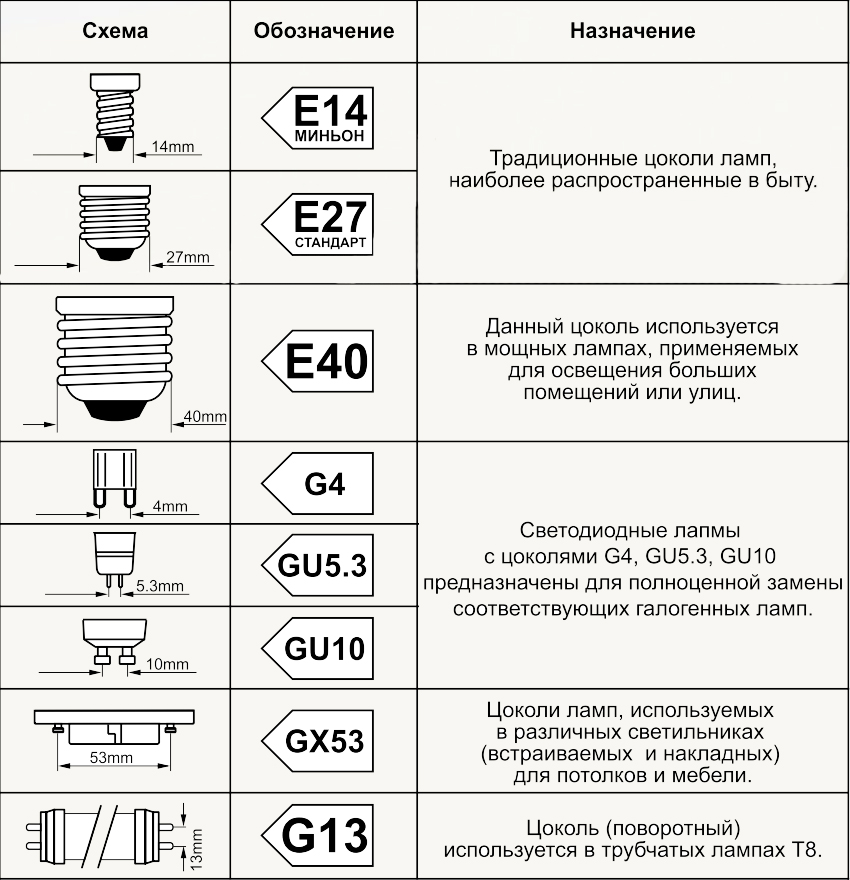
Less common are pin bases marked G. They have different sizes, it is necessary to select a lamp in accordance with a specific designation.
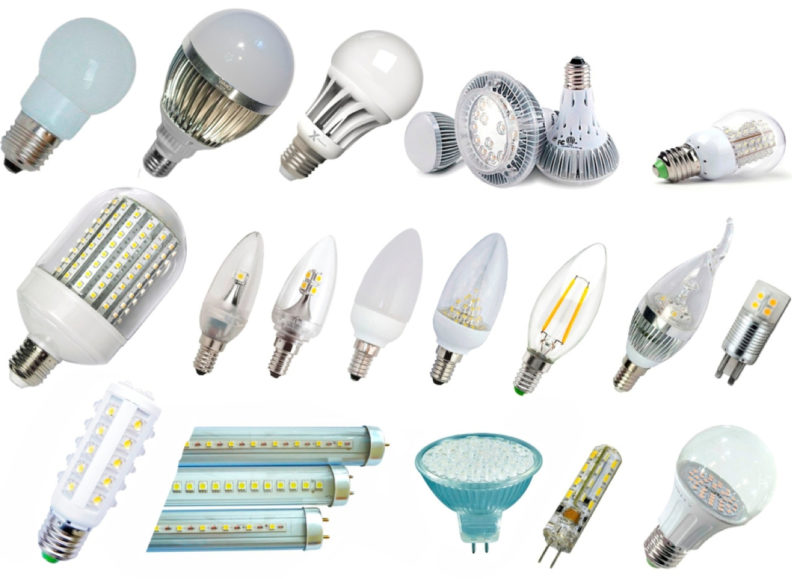
The shape of the lamps is varied. Household modifications in the form of a pear, a ball or a candle are popular.
When choosing light bulbs for the home, special attention should be paid to the glow temperature. All devices are usually divided according to this principle into two large groups: with warm and cold light. Moreover, in each group there are many shades. Now light bulb manufacturers are trying to indicate the full range of temperatures on packages and prescribe a specific value in kelvins.
Rating of the best
For a visual comparison of offers on the market, consider which models of light bulbs are the best in different groups.
ERA C0038550 E14 B35 28W
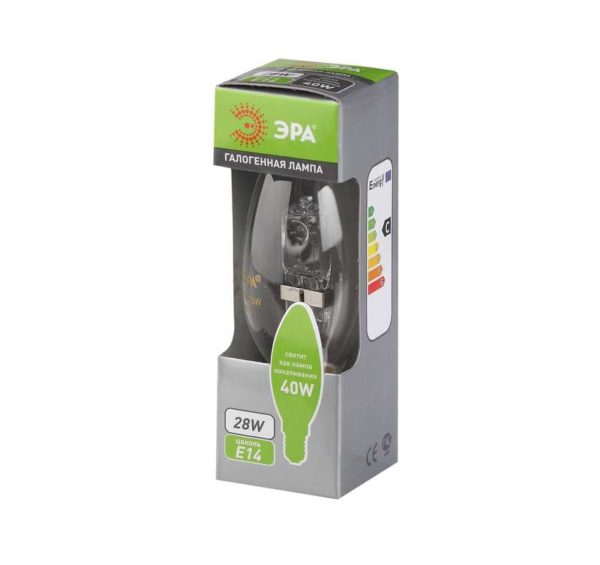
Halogen lamp from the category of incandescent appliances. It can provide a strong light output of 392 lm, suitable for lighting large rooms.
The candle-shaped bulb gives the model a classic look and helps to match the source with classic fixtures. The bulb is completely transparent, the lamp emits neutral light with a temperature of 3000 K.
The standard E14 base allows the model to be used in ordinary home lamps designed for "candles". Compared to a conventional incandescent lamp, the device consumes half the energy.
Camelion 10609 E27 T2 20W
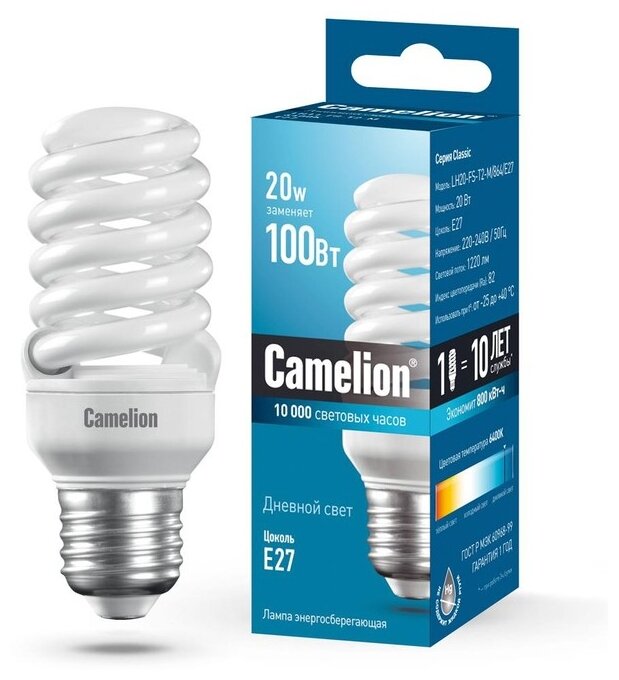
Fluorescent energy-saving lamp with a power of 20 W. The efficiency is comparable to 100W incandescent lamps.
The element is able to function stably at temperatures from -25 to +40 degrees Celsius. For this reason, the lamp is suitable for use in basements or basements.
The device is designed to operate for 10,000 hours. To connect to the network, a standard E27 base is used; the element can be installed in place of a traditional incandescent lamp.
The flow power of 1320 lm is enough for efficient lighting of residential or commercial premises of a large area.
Gauss 102502211-D E27 A60 11 W
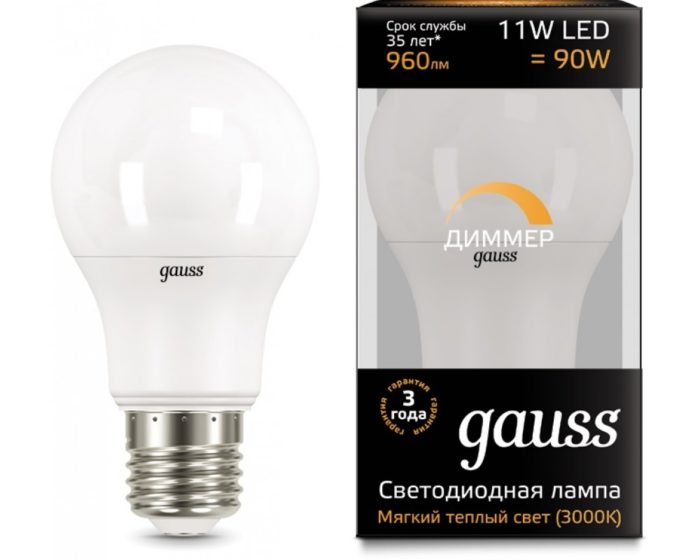
The lamp belongs to the LED category. The design allows you to combine the model with a dimmer, which significantly expands the functionality of the system. The device consumes only 11 watts, while the efficiency figures are equivalent to 90 watt incandescent lamps.
One such lamp can illuminate approximately 5.5 m2. At the same time, daylight white light with a temperature of 4100 K is suitable for work and leisure. Even with prolonged use, irritation or eye fatigue will not occur.
To connect here, the classic E27 cartridge is also used, which is compatible with old Soviet-style lamps.
Service life of light bulbs
When choosing a light bulb for the home, it is important to know the resource of products. Incandescent lamps are the least durable, rated for approximately 1000 hours of operation. This is due to the degradation of the filament during operation.
How to make a light bulb burn up to 100 years and consume less electricity
Energy-saving fluorescent lamps have more acceptable performance. High-quality models from well-known manufacturers can work an average of 10,000 hours without any problems. They also contain wearing elements (electrodes), which lose their properties over time.
The most durable LED devices, many of which are able to function stably for 50,000 hours. However, they also gradually degrade, which is expressed in a decrease in brightness.
If the choice of light bulbs for the home is due to cost-effectiveness, the LED fixture will be the best option. For specific purposes, an incandescent or fluorescent lamp may be suitable.