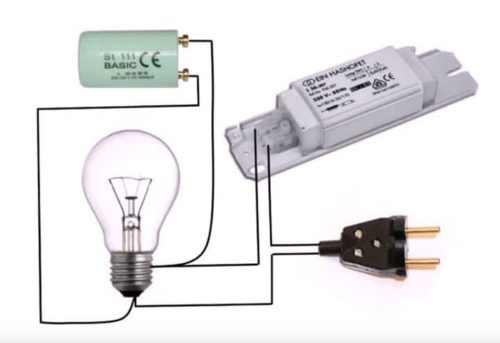
How to connect the DRL lamp
Arc mercury lamp (DRL) is one of the varieties of electrical lighting devices. Most often used to illuminate large objects and territories: plants, factories, warehouses. Often devices are found in street lamps. The devices are characterized by a high degree of light output, but they have a low color rendering quality. To properly connect the DRL lamp, you must use special schemes and follow the basic recommendations.
What is a choke for?
The throttle is responsible for the correct operation of the light source. Often powerful devices require impressive network voltage indicators. This in turn leads to overheating and burnout of the device. The component avoids such consequences. In this case, it must be included in the electrical circuit in series.
Thus, the inductor limits the voltage and current during operation.
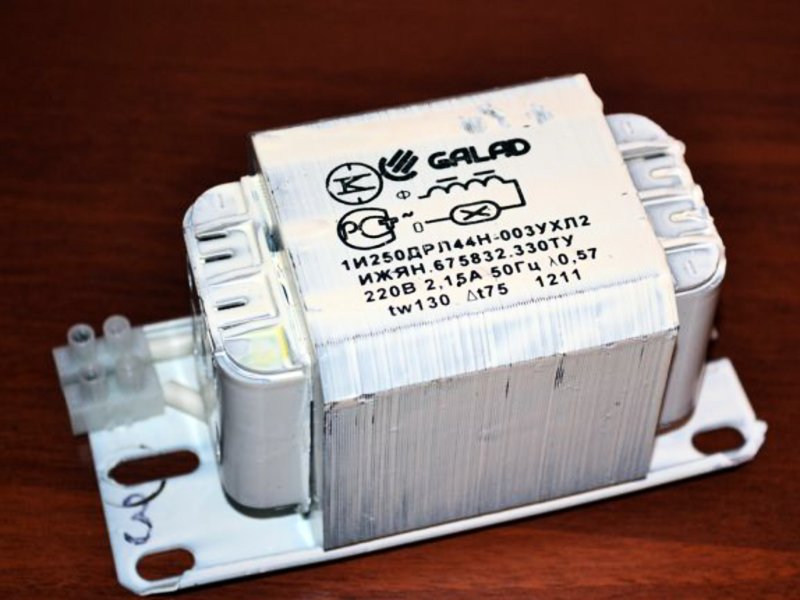
To limit current surges, a connection is made through a resistance element.It is a ballast of several high resistance inductors that prevents the lamp from burning out. In the gaseous environment of the DRL, an electrical breakdown occurs, leading to the appearance of an arc discharge. In this case, the ionized gas loses resistance, which causes an increase in current and the release of a significant amount of heat. If the current is not limited by special chokes, the heated gaseous medium will disable the lamp.
If the DRL is directly connected to the network, then failure in most cases is a matter of time. More often than not, overheating occurs instantly. The breakdown rate is affected by specific indicators of the electrical circuit, the magnitude of the voltage, external factors (air temperature, humidity, etc.). This applies only to conventional mercury lamps, which make up the majority of the market.
When connecting the inductor, you can not observe the polarity. It will ensure the stability of the lamp and prevent possible breakdowns.
The main parameter for the inductor is the rated current. It is for him that equipment is selected taking into account the power of the lighting device. You can use the following table.
| The power of the used DRL | Choke rated current |
|---|---|
| 125 W | 1.15 A |
| 250 W | 2.15 A |
| 400 W | 3.25 A |
| 700 W | 5.45 A |
Despite the usefulness of the throttle, it is increasingly becoming a thing of the past. Modern units of electronic arc stabilization come to replace them. With their help, you can fine-tune the parameters of work, control workloads. The set indicators will be saved even with significant voltage drops in the network.
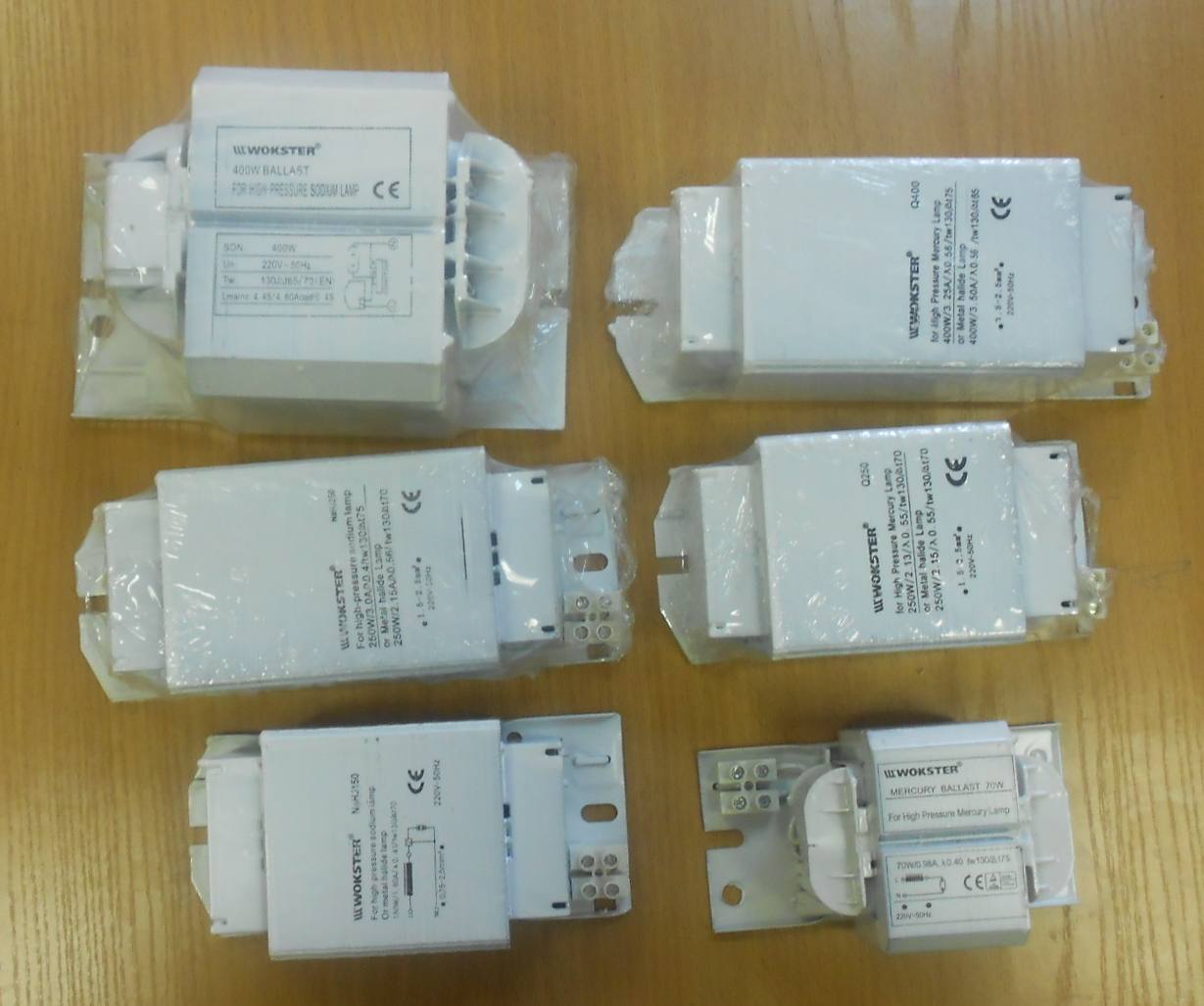
The reactance of the inductor is related to the parameters of the inductor.1 henry of inductance passes 1 A of current at a voltage of 1 V. When considering coils, it is worth considering:
- cross-sectional area of a copper conductor;
- number of turns;
- core material;
- cross section of the magnetic circuit.
The coil also has active resistance, which must be taken into account when selecting parts for specific lighting fixtures. Chokes of certain sizes are suitable for each type of DRL.
Wiring diagrams
Most of the DRL devices have a choke in the circuit. However, there are methods that allow you to use DRL without a throttle.
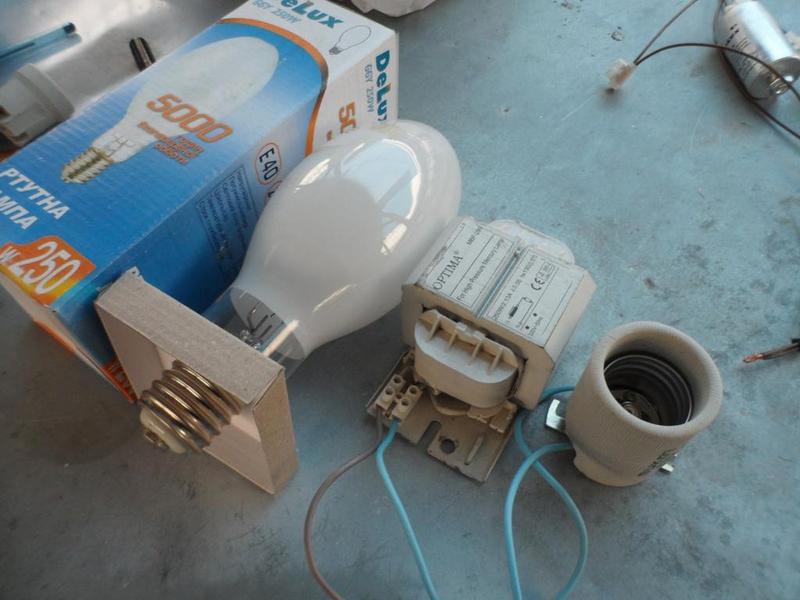
Through the throttle
The connection diagram for any DRL lamp is quite simple and includes connecting loads in an electrical circuit in series. A 220 volt network is used, operating at a standard frequency. Due to this, even a high-power street light source can be connected to a regular home network.
Resistance stabilizes and corrects power indicators. Due to it, a uniform glow is achieved without blinking and other undesirable factors. At the same time, the luminous flux remains unchanged, which is important for any light source.
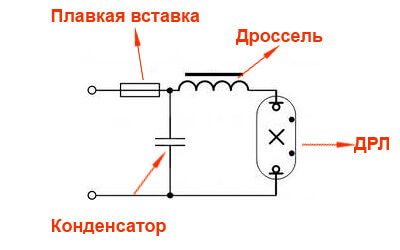
During start-up, the system consumes significant voltage, which often reaches two or three input ratings. The resistance stabilizes this voltage and prevents the device from burning out.
The DRL lamp does not light up instantly. In some cases, it can take up to fifteen minutes to fully warm up and reach maximum light output.
The power of lighting devices can be from 50 to 2000 watts.Specific power indicators do not affect the connection scheme and always require a single-phase 220 V network with a frequency of 50 Hz.
Without choke
If you need to connect a DRL 250 luminaire without a choke, a simple solution would be to purchase a DRL that functions without additional components. A spiral is installed inside the devices, which is responsible for voltage stabilization.
You can also use a traditional incandescent lamp. It must be equivalent in power to the used DRL and have the required resistance rating. The incandescent lamp acts as a resistor, effectively lowering the output voltage.
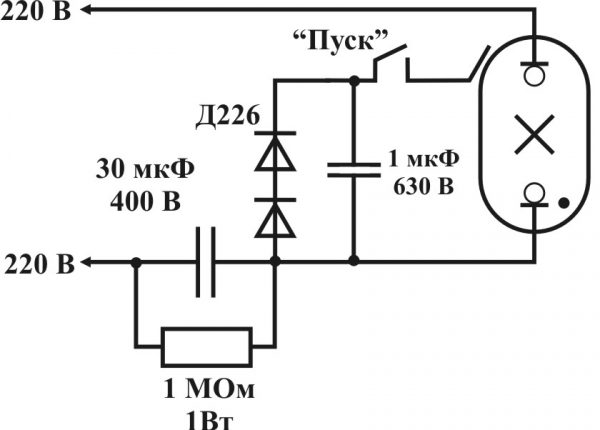
The resistance element can be replaced by a capacitor or a set of capacitors. In this case, it is important to calculate the current output by the circuit as accurately as possible so that it corresponds to the operating voltage.
How to check if the lamp is working
After connecting the DRL, it is recommended to check its serviceability. If the device does not turn on or is unstable, the electrical circuit is tested with a tester, multimeter or ohmmeter.
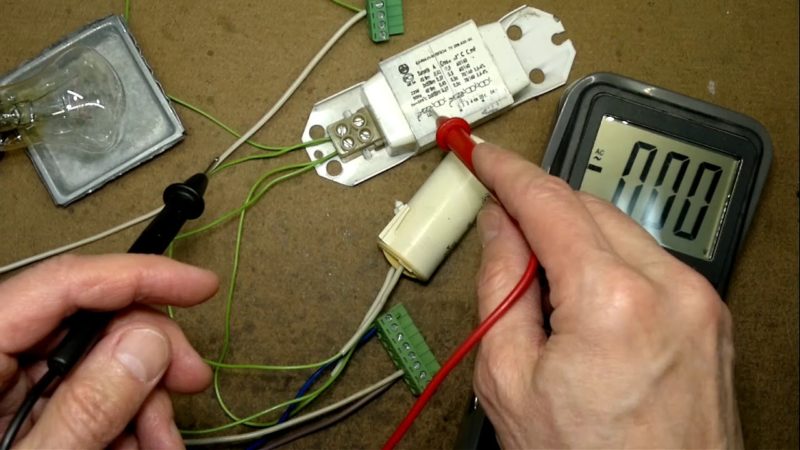
Winding turns are checked for breaks or short circuits. The gap can be determined by infinitely large indicators of resistance on the instrument screen. The way out will be a complete replacement of the winding. After repair is complete, restart the lamp.
If the resistance rises by several points, the winding is probably damaged and there is a short circuit between the turns. The fewer turns are in contact with each other, the less will be the increase in resistance.
Thematic video: Starting the DRL 250 lamp through chokes from fluorescent lamps
Sometimes a short circuit occurs in the winding.In this case, no increase in resistance will occur, and the operation of the luminaire will not be affected in any way. So after checking the winding with an ohmmeter, you should check the lamp itself and the electricity supply system. It is not uncommon for lamps to fail the first time they are turned on. This may be due to the low quality of the device, incorrectly configured power modes and other factors.