How to calculate lighting in a room
The calculation of the illumination of the room must be carried out in advance. This will help determine the power of the fixtures and navigate their location to ensure uniform light. It is important to remember that the illumination for different rooms is different, so the appropriate norm is selected first, and then all the necessary calculations are carried out. They can be done independently if the necessary data is collected at hand.
How is the illumination normalized depending on the room
Illumination is measured in suites and is the most accurate indicator for determining the quality of light, as it shows how much light falls on 1 square meter. The strength of the light in lumens does not reflect the actual state of affairs, since the flow can spread in different directions, which is undesirable when lighting rooms.
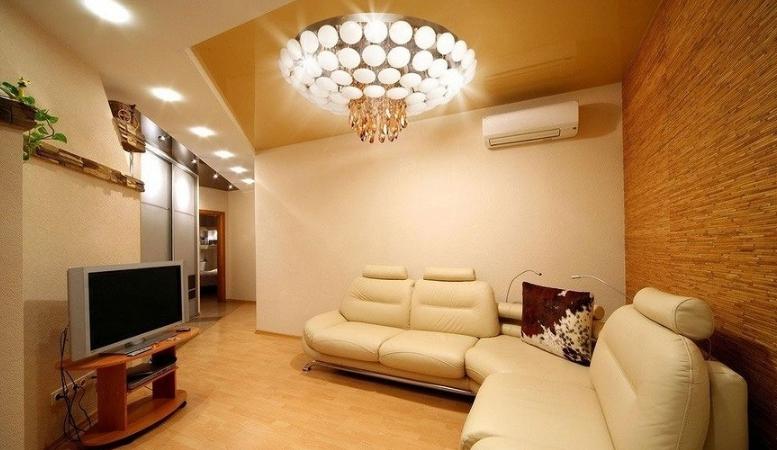
In a basic sense 1 lux is equal to 1 lumen of light spread over an area of 1 square meter.. That is, if the lamp produces 200 lm and spreads within 1 sq.m., the illumination will be 200 lx. If the same light source extends to 10 squares, then the illumination value will be equal to 20 luxm.
In SNiP there are lighting standards not only for industrial, but also for residential premises. They also need to be guided by the calculations. A suitable value should be a guide that will simplify the work and guarantee a good result. Below are some of the standards:
- Basements, ground floors and attics - 60 Lx.
- Storerooms, utility rooms, etc. – 60 suites.
- Landings and marches, entrance space in apartment buildings - 20 Lx.
- Corridors in apartments or private houses - 50 suites.
- Hallways - 60 Lx, while additional mirror lighting is often required.
![How to calculate lighting in a room]() The light in the hallway is usually concentrated near the mirror.
The light in the hallway is usually concentrated near the mirror. - Bedrooms - 120-150 suites. At the same time, it is worth choosing sources of reflected or diffused light that create a comfortable environment.
- Bathrooms, lavatories – 250 lx.
- Kitchens - at least 250 lux, lighting zoning may be required.
- Offices or home libraries - 300 Lx or more.
- Dining areas or separate rooms - 150 Lx.
- Living rooms - 150 suites.
- Children - from 200 Lux.
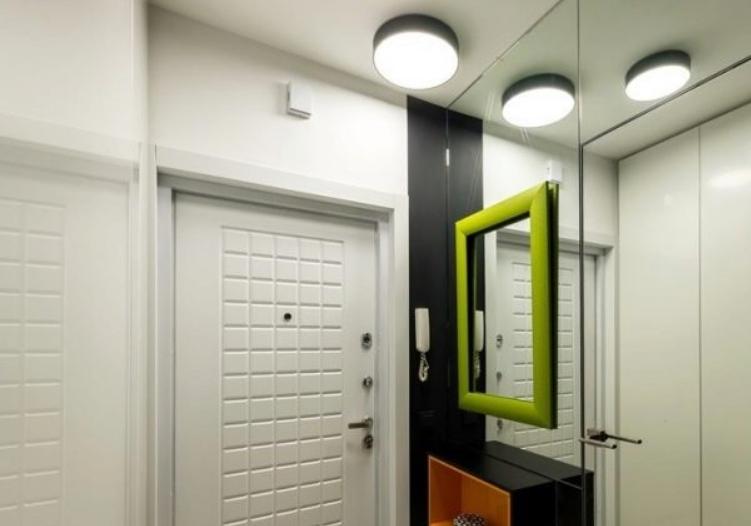
In each of the rooms it is necessary to think over additional lighting. With it, you can highlight individual zones or create a workspace with perfect visibility.
It must be remembered that this is a calculation of light per square meter.That is, if the area of \u200b\u200bthe room is 10 squares, the norm is multiplied by 10 to determine the total indicator that the light source should give out, or several, it all depends on the type of equipment and its power.
Read also: Norms of illumination of residential premises
How to independently calculate the illumination
In order not to delve into complex formulas and not understand electrical terms, you can use a few simple recommendations. There are a number of aspects that must be taken into account when calculating in order to achieve an accurate result. All of them affect the illumination in one way or another, and if you ignore them, using only the norm, the light will not meet the requirements.
Ceiling height
All SNiP standards are calculated for rooms with ceilings 2.5-2.7 m high. This is the standard value that is found in most residential and office space. But often the height is different, and this directly affects the propagation of light. Therefore, to simplify the calculations, experts use correction factors that are selected from the appropriate range:
- 2.5-2.7 m - 1.
- 2.7-3.0 m - 1.2.
- 3.0-3.5 m - 1.5.
- 3.5-4.5 m - 2.
If the height is even greater, it is necessary to carry out individual calculations. This is due to the fact that the increase in the height of the location is not proportional to the decrease in illumination indicators.
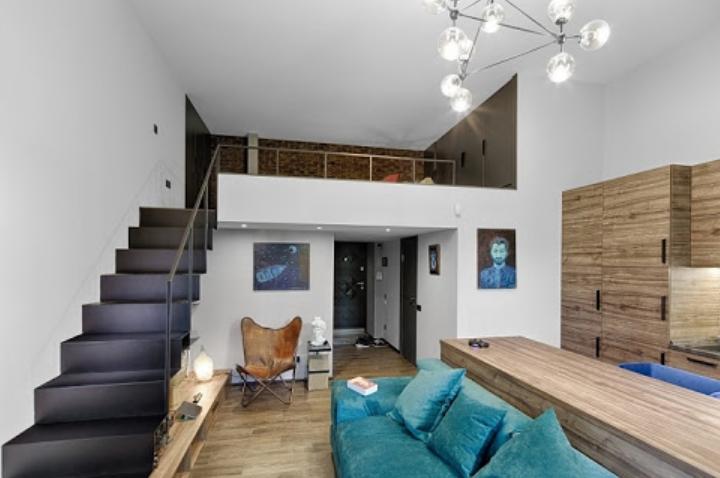
Sometimes the height varies in the same room, or the design of the house is open and the ceiling partition goes at an angle. In this case, the easiest break the space into separate zones, determine the approximate height in each and based on this, calculate the illumination and use the appropriate coefficient.If you need to round the result, it is better to do it upwards, as there are a number of indicators that are not taken into account and most often the actual result is slightly worse than planned.
Recommended for viewing.
Surface characteristics
When calculating the illumination for any room, it is worth considering the characteristics of the surfaces - the ceiling, floor and walls. Reflectivity depends on their color and texture, which greatly affects not only the perception of the room, but also the light in it.
First of all, you need to remember that matte surfaces reflect light twice as bad as glossy ones. Therefore, a correction of 15-20% is always made if the reflectivity of most of the room is not very high. But the main indicator that affects the calculations is the color scheme. The reflectivity directly depends on it, so the following data should be used in the calculations:
- White surfaces reflect about 70% of the light that hits them.
- Light and pastel colors have an average reflectance of 50%.
- Gray surfaces and similar shades reflect about 30% of the light.
- Dark walls, floors and ceilings have a reflectivity of only 10%.
There is a special formula for determining corrections to the illumination index depending on the characteristics of the surfaces. But it is not necessary to understand it, you can use a simplified version of the calculations, which also provides a good result.
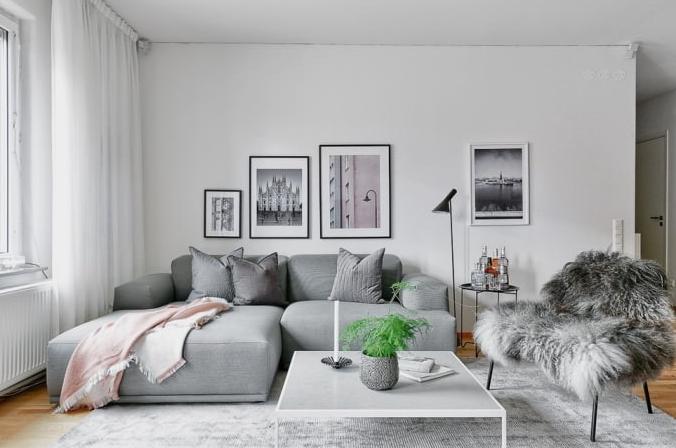
First, the reflection values of the ceiling, walls and floor are summarized. The result is divided by 3, after which the result must be multiplied with the norm of illumination.It is determined by selecting the appropriate option from SNiP (if necessary, multiplied by a correction factor if the ceiling height exceeds 270 cm).
Black surfaces completely absorb the luminous flux, if large areas have this color, the lighting must be selected especially carefully.
Calculation methods
There are two main methods, which depend on the type of light sources used. If conventional incandescent lamps are installed, it is easiest to make calculations in watts. For all other options, the calculation in lumens is more suitable, since they are indicated on packages with lamps, which allows you to quickly calculate the required indicators.
Calculating room lighting using calculators
Calculator for determining the number of fixtures.
The lamp power calculator depends on their number.
Watts
Until a couple of decades ago, this was the only method, since incandescent bulbs were used, and only power was indicated on them. There are certain standards for illumination for different rooms, established for light sources with a filament:
- Bedrooms - from 10 to 20 watts.
- Living rooms from 10 to 35 W.
- Kitchens - 12-40 W.
- Bathrooms and toilets - from 10 to 30 watts.
Most often applied average figure for all rooms in 20 W. As you can see from the list, it is suitable for all cases, so it can be used without any restrictions. To calculate the illumination, you first need to calculate the area, rounding up if necessary.

Correction factors are determined for the height of the flow and the reflectivity of the ceiling, walls and floor. Next, you need to multiply 20 W by them, and multiply the result with the area of \u200b\u200bthe room. Rounding is carried out in the direction of increase so that an even number of bulbs is obtained.
The most primitive version of the calculation involves multiplying the area by 20, which gives the total power of incandescent lamps in watts. But even with all its simplicity, most often it gives a good result and can be used at first. Subsequently, it is still better to recalculate the indicators and, if necessary, replace the lamps.
In lumens
This indicator is indicated on all modern lamps, which simplifies the calculation procedure and makes it more accurate. First you need to clarify the norm of illumination in lux for a particular room and calculate its area, if this is not done in advance. It is also important to choose fixtures in order to understand to what area and how the luminous flux will be distributed.
Next, multiply the required illumination by the area, and divide the result by the power of one lamp. The total number is rounded up.
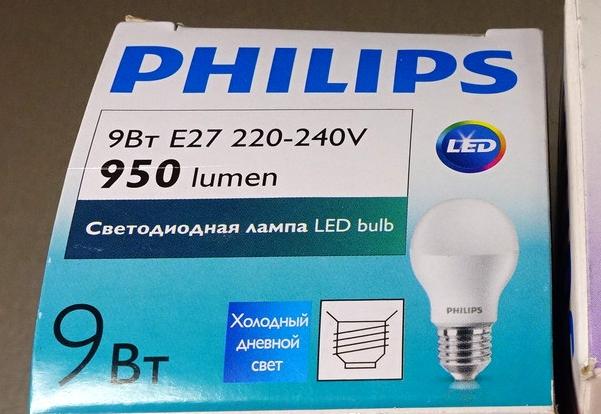
Calculate the number of lamps by area, knowing illumination rate, not difficult. The main thing is to know the total power of the lamps installed in them and the area over which the light spreads.
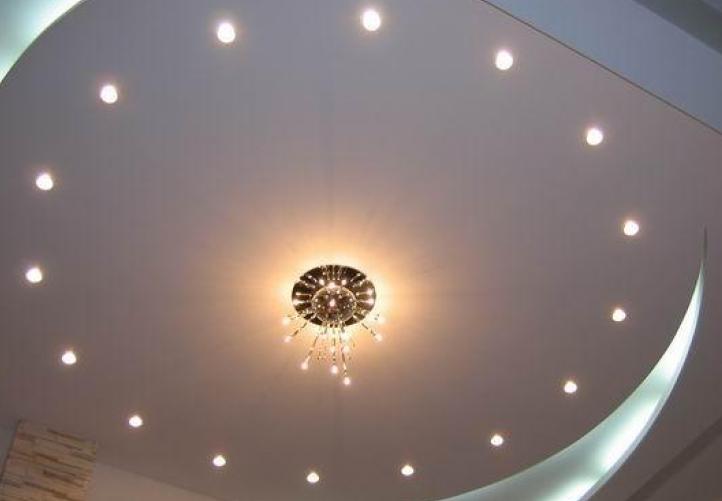
Determination of the utilization factor of the luminous flux η
This value does not need to be calculated, it can be found ready-made in tables, which greatly simplifies the process. But in order to use the information, one more coefficient is needed - i, which is calculated by the formula:
i = Sp / ((a + b) × h)
Everything is simple here:
- Sp - area of the room in square meters;
- a - the length of the room;
- b - the width of the room;
- h - the distance from the floor to the lamp.
Once the room factor has been determined, data can be selected from the tables. Below are options for different light sources.
| Option for equipment located on the surface of the ceiling or suspended from it | ||||||||
 | Reflection coefficient, % | Coefficient premises i | ||||||
| Ceiling | 70% | 50% | 30% | |||||
| Walls | 50% | 30% | 50% | 30% | 10% | |||
| Floor | 30% | 10% | 30% | 10% | 10% | |||
| Luminous flux utilization factor | 0,26 | 0,25 | 0,20 | 0,19 | 0,17 | 0,13 | 0,06 | 0,5 |
| 0,3 | 0,28 | 0,24 | 0,23 | 0,2 | 0,16 | 0,08 | 0,6 | |
| 0,34 | 0,32 | 0,28 | 0,27 | 0,22 | 0,19 | 0,10 | 0,7 | |
| 0,38 | 0,36 | 0,31 | 0,30 | 0,24 | 0,21 | 0,11 | 0,8 | |
| 0,40 | 0,38 | 0,34 | 0,33 | 0,26 | 0,23 | 0,12 | 0,9 | |
| 0,43 | 0,41 | 0,37 | 0,35 | 0,28 | 0,25 | 0,13 | 1,0 | |
| 0,46 | 0,43 | 0,39 | 0,37 | 0,30 | 0,26 | 0,14 | 1D | |
| 0,48 | 0,46 | 0,42 | 0,40 | 0,32 | 0,28 | 0,15 | 1,25 | |
| 0,54 | 0,49 | 0,47 | 0,44 | 0,34 | 0,31 | 0,17 | 1,5 | |
| 0,57 | 0,52 | 0,51 | 0,47 | 0,36 | 0,33 | 0,18 | 1,75 | |
| 0,60 | 0,54 | 0,54 | 0,50 | 0,38 | 0,35 | 0,19 | 2,0 | |
| 0,62 | 0,56 | 0,57 | 0,52 | 0,39 | 0,37 | 0,20 | 2,25 | |
| 0,64 | 0,58 | 0,59 | 0,54 | 0,40 | 0,38 | 0,21 | 2,5 | |
| 0,68 | 0,60 | 0,63 | 0,57 | 0,42 | 0,40 | 0,22 | 3,0 | |
| 0,70 | 0,62 | 0,66 | 0,59 | 0,43 | 0,41 | 0,23 | 3,5 | |
| 0,72 | 0,64 | 0,64 | 0,61 | 0,45 | 0,42 | 0,24 | 4,0 | |
| 0,75 | 0,66 | 0,72 | 0,64 | 0,46 | 0,44 | 0,25 | 5,0 | |
| Table for wall or ceiling luminaires with downward luminous flux | ||||||||
 | Reflection coefficient, % | Coefficient premises i | ||||||
| Ceiling | 70% | 50% | 30% | |||||
| Walls | 50% | 30% | 50% | 30% | 10% | |||
| Floor | 30% | 10% | 30% | 10% | 10% | |||
| Luminous flux utilization factor | OD 9 | 0,18 | 0,15 | 0,14 | 0,11 | 0,09 | 0,04 | 0,5 |
| 0,24 | 0,22 | 0,18 | 0,18 | 0,14 | 0,11 | 0,05 | 0,6 | |
| 0,27 | 0,26 | 0,22 | 0,21 | 0,16 | 0,13 | 0,06 | 0,7 | |
| 0,31 | 0,29 | 0,25 | 0,25 | 0,18 | 0,16 | 0,07 | 0,8 | |
| 0,34 | 0,32 | 0,28 | 0,28 | 0,20 | 0,18 | 0,08 | 0,9 | |
| 0,37 | 0,35 | 0,32 | 0,30 | 0,22 | 0,20 | 0,09 | 1/0 | |
| 0,40 | 0,37 | 0,34 | 0,33 | 0,24 | 0,21 | 0,11 | 1/1 | |
| 0,44 | 0,41 | 0,38 | 0,36 | 0,26 | 0,24 | 0,12 | 1,25 | |
| 0,48 | 0,44 | 0,42 | 0,40 | 0,29 | 0,26 | 0,14 | 1,5 | |
| 0,52 | 0,48 | 0,46 | 0,43 | 0,31 | 0,29 | 0,15 | 1,75 | |
| 0,55 | 0,50 | 0,50 | 0,46 | 0,33 | 0,31 | 0,16 | 2,0 | |
| 0,58 | 0,52 | 0,53 | 0,49 | 0,35 | 0,33 | 0,17 | 2,25 | |
| 0,60 | 0,54 | 0,55 | 0,51 | 0,36 | 0,34 | 0,18 | 2,5 | |
| 0,64 | 0,57 | 0,59 | 0,54 | 0,39 | 0,36 | 0,20 | 3,0 | |
| 0,67 | 0,60 | 0,62 | 0,56 | 0,40 | 0,39 | 0,21 | 3,5 | |
| 0,69 | 0,61 | 0,65 | 0,58 | 0,42 | 0,40 | 0,22 | 4,0 | |
| 0,73 | 0,64 | 0,69 | 0,62 | 0,44 | 0,42 | 0,24) | 5,0 | |
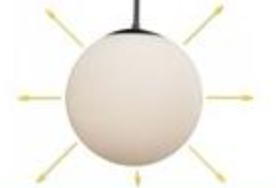
| According to this table, a coefficient is selected if diffuser shades are installed | ||||||||
 | Reflection coefficient, % | Coefficient premises i | ||||||
| Ceiling | 70% | 50% | 30% | |||||
| Walls | 50% | 30% | 50% | 30% | 10% | |||
| Floor | 30% | 10% | 30% | 10% | 10% | |||
| Luminous flux utilization factor | 0,28 | 0,28 | 0,21 | 0,21 | 0,25 | 0,19 | 0,15 | 0,5 |
| 0,35 | 0,34 | 0,27 | 0,26 | 0,31 | 0,24 | 0,18 | 0,6 | |
| 0,44 | 0,39 | 0,32 | 0,31 | 0,39 | 0,31 | 0,25 | 0,7 | |
| 0,49 | 0,46 | 0,38 | 0,36 | 0,43 | 0,36 | 0,29 | 0,8 | |
| 0,51 | 0,48 | 0,41 | 0,39 | 0,46 | 0,39 | 0,31 | 0,9 | |
| 0,54 | 0,50 | 0,43 | 0,41 | 0,48 | 0,41 | 0,34 | 1,0 | |
| 0,56 | 0,52 | 0,46 | 0,43 | 0,50 | 0,43 | 0,35 | 1D | |
| 0,59 | 0,55 | 0,49 | 0,46 | 0,53 | 0,45 | 0,38 | 1,25 | |
| 0,64 | 0,59 | 0,53 | 0,50 | 0,56 | 0,49 | 0,42 | 1,5 | |
| 0,68 | 0,62 | 0,57 | 0,54 | 0,60 | 0,53 | 0,45 | 1,75 | |
| 0,73 | 0,65 | 0,61 | 0,56 | 0,63 | 0,56 | 0,48 | 2,0 | |
| 0,76 | 0,68 | 0,65 | 0,60 | 0,66 | 0,59 | 0,51 | 2,25 | |
| 0,79 | 0,70 | 0,68 | 0,63 | 0,68 | 0,61 | 0,54 | 2,5 | |
| 0,83 | 0,75 | 0,72 | 0,67 | 0,72 | 0,62 | 0,58 | 3,0 | |
| 0,87 | 0,81 | 0,77 | 0,70 | 0,75 | 0,68 | 0,61 | 3,5 | |
| 0,91 | 0,80 | 0,81 | 0,73 | 0,78 | 0,72 | 0,65 | 4,0 | |
| 0,95 | 0,83 | 0,86 | 0,77 | 0,80 | 0,75 | 0,69 | 5,0 | |
It is not difficult to calculate the illumination in a room, for this you need simple data, the main thing is to find lamps or fixtures in advance in order to know their characteristics.It does not require complex formulas, everything is done manually or using tables.